 English
 Espanol
 Deutsch
 Francais
 Portugues
 Italiano
Jannik Sinner Serves Dominant Win Over Struff at Wimbledon
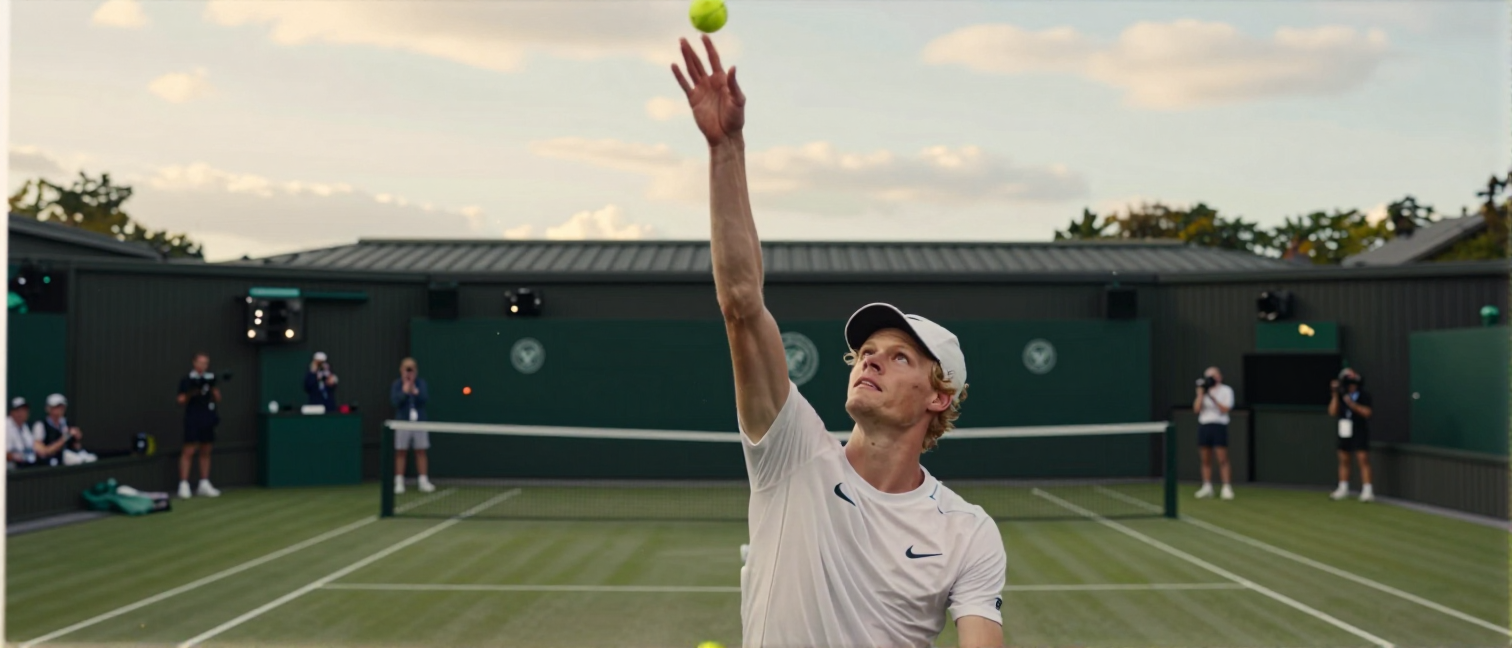
Jannik Sinner powered through Wimbledon’s quarter-finals on July 7, 2026, dispatching Jan-Lennard Struff 7-5, 7-6(4), 6-3 with 16 aces and a 65% first-serve success rate, cementing his position as defending champion.
How did Sinner dominate the match?
Sinner’s serve acted like a metronome. He landed 65 percent of his first serves and won 84 percent of those points. Even when Struff returned, Sinner still claimed 69 percent of first-serve points. The Italian’s 16 aces outpaced Struff’s 12, giving him the edge in tight moments.
What did the statistics reveal?
Against Struff, Sinner’s first-serve points conversion rose to 69 percent, while his overall first-serve win rate hovered around 84 percent. In the second set tiebreak, he served only three points, yet each was an ace or a decisive slice that forced a net error from Struff.
Why is the serve now Sinner’s main weapon?
Earlier in the tournament, Sinner admitted his baseline rhythm was off. After a four-round win over Shintaro Mochizuki, he highlighted the need to rely on his serve. Against Mochizuki, he posted a 70 percent first-serve rate, 10 aces, and a flawless 7-0 tiebreak. Those numbers foreshadowed his later performance against Struff.
Who could await Sinner next?
The All England Club buzzes with speculation that 24-time Grand Slam champion Novak Djokovic, aged 24, may await Sinner in the semifinals under an 87-degree sun. Both players have trained for hotter conditions, a factor that could shape the next round.
How does this fit into Sinner’s 2026 season?
Sinner entered Wimbledon after a blistering clay-court swing, capturing Monte Carlo, Madrid, and Rome in succession. He also claimed titles at Indian Wells and Miami. Yet his baseline game showed signs of slip, prompting a shift toward serve dominance-a strategy that paid off in London.
What does this mean for his title defence?
If Sinner can keep his serve on this level, the path to a second consecutive Wimbledon crown looks clearer. The margins at a Grand Slam are razor-thin; a single ace can swing a set, and Sinner’s recent numbers suggest he’s ready to seize those moments.
What did Sinner say after the match?
In the post-match press conference, Sinner noted, “I felt like I was serving well at times, especially important moments today. That helped me also being a bit more freer in the return games.” His confidence in the serve mirrors the statistical edge he displayed on court.